Signs of Hope in a Warming Gulf of Maine
Perspectives | Aug 4, 2026
The Gulf of Maine is warming faster than most of the world's oceans. This shapes much of what we hear about the region's marine life: the decline of northern shrimp, struggling cod stocks, species shifting their distributions. But at GMRI, our scientists are also tracking a different kind of story: one where species aren't taking these changes lying down.
These are a collection of ecological short stories, each showing a different way that a species, sometimes with a boost from human intervention, sometimes on its own, is finding a path forward.
Alewives Are Reclaiming Their Rivers
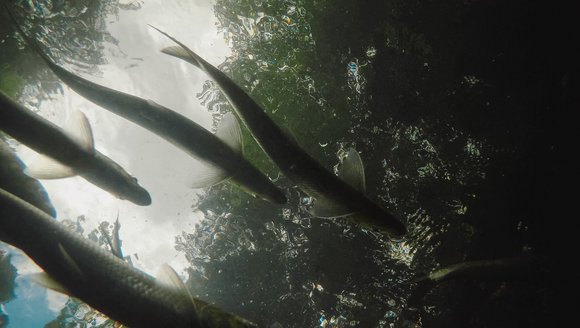
Alewives belong to the river herring family, a group of fish that spend their adult lives in the Gulf of Maine but return to freshwater rivers to spawn. For most of the last century, that return trip was blocked in many spots by dams built at the mouths of Maine's rivers, including throughout the Penobscot River watershed, which drains roughly a third of the state. The dams cut off access to the freshwater habitat alewives need to complete their life cycle. Prior to 2012, counts of alewives moving up the Penobscot numbered only in the hundreds.
That changed with the Penobscot River Restoration Project, a multi-organization effort that removed some dams, modified others, and installed fish passages to reopen thousands of miles of freshwater habitat. The results have been dramatic. The most recent counts show more than six million alewives now making the spawning run up the Penobscot each year. Similar recoveries are underway elsewhere, including a healthy run on the Presumpscot River in Portland and a restoration currently underway on the Royal River.
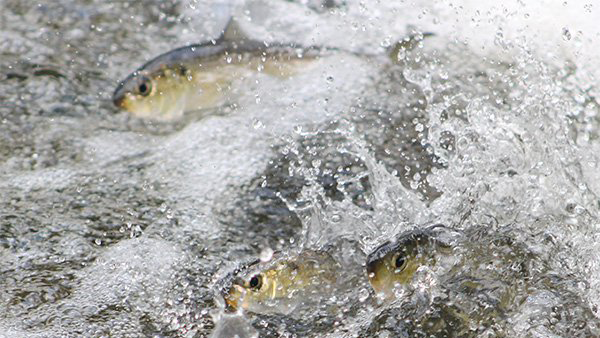
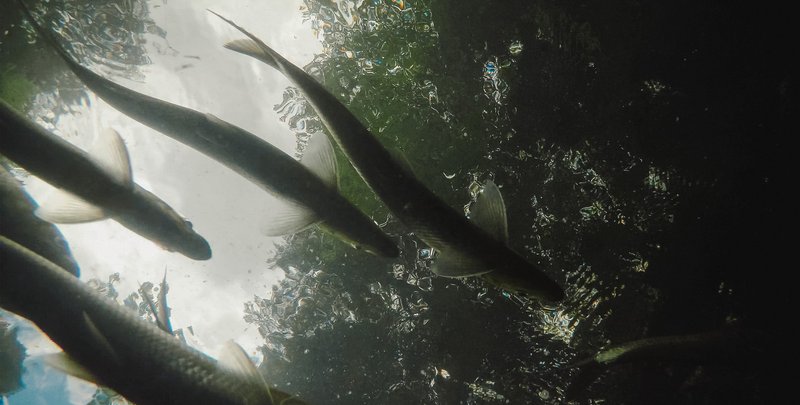
The alewife recovery also appears to be rippling outward through the broader ecosystem. Alewives are not near the southern edge of their range the way species like cod and northern shrimp are, so warming waters haven't posed the same threat to them, and with Atlantic herring in decline, alewives may be filling some of that ecological role as a forage fish. Seals, which favor prey with predictable migration patterns, appear to be capitalizing on the larger alewife runs, and the recent uptick in shark sightings along the Maine coast may reflect the same dynamic working its way up the food chain. More alewives can support more seals, and more seals can be part of what's drawing sharks closer to shore. None of this points to more sharks specifically so much as a healthier, more productive nearshore ecosystem overall. Alewives, restored to their rivers, are playing a keystone role in it.
Another part of what may make alewives resilient at the population level is that they don't place all their spawning bets on one river. Individual alewives are largely loyal to the river where they were born, but across the species as a whole, populations spawn in dozens of rivers and streams up and down the Maine coast. That spread creates a sort of hedging of bets. If one river has a bad year, a storm, a new beaver dam, or low flow, that population's run may struggle, but it doesn't take down alewives as a whole, because other rivers are likely having a normal year at the same time. The more rivers and streams that are open and accessible, the stronger that hedge becomes, which is part of the case for continued habitat restoration and preservation work.
Blue Mussels Are Moving to Deeper Water
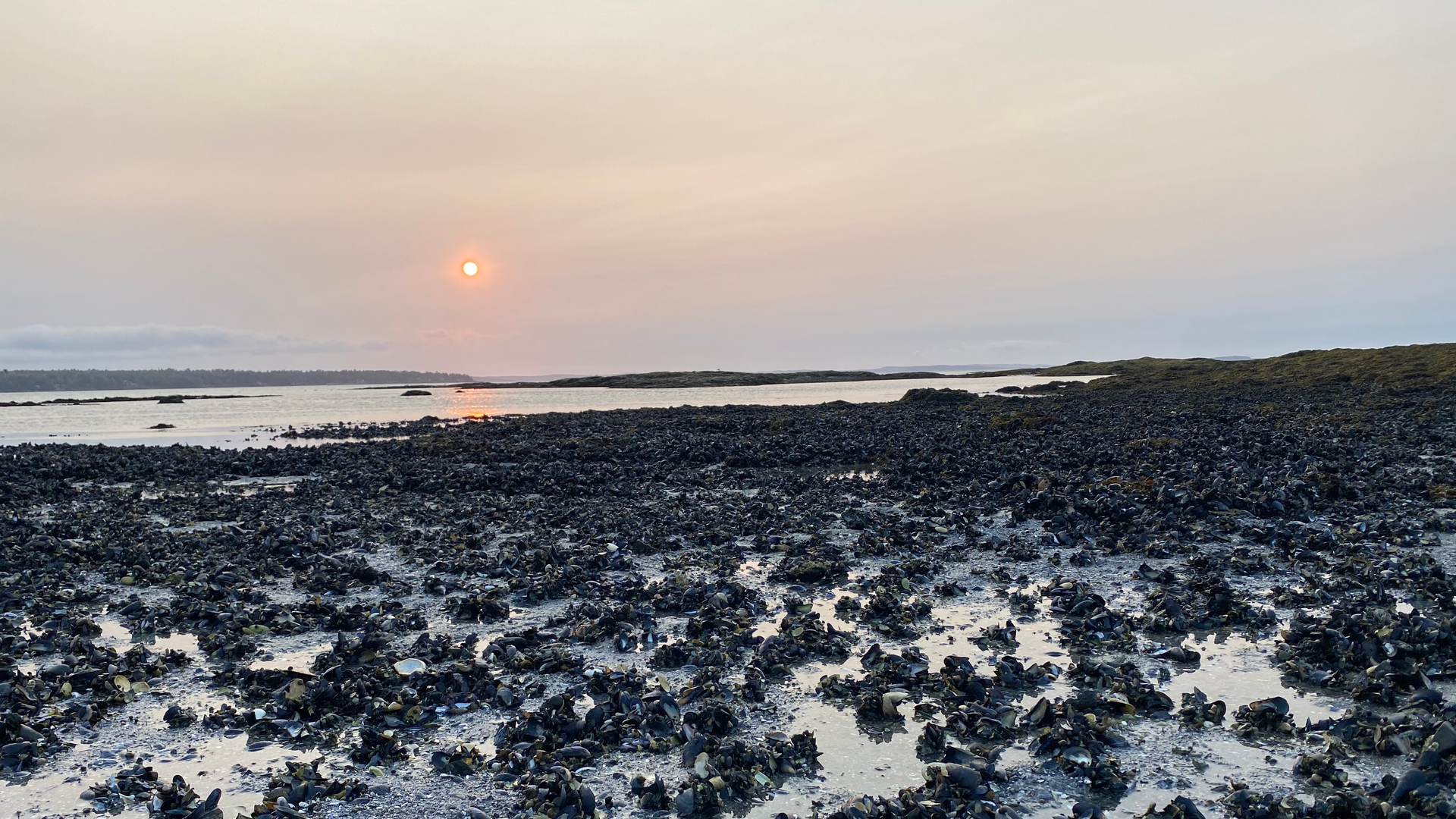
Anyone who has spent time along the Maine coast over the past couple of decades has likely noticed a decline in intertidal blue mussels. The beds that were once easy to spot at low tide have thinned out considerably, and survey data confirms that decline over the last twenty years.
But the mussels may not be disappearing so much as relocating. In 2017, GMRI piloted a camera survey to look for mussels below the intertidal zone, in the subtidal areas that stay submerged even at low tide. Near Mackworth Island in Casco Bay, cameras found mussels in spots that the Maine Department of Marine Resources had surveyed decades earlier and found empty. Those areas sit below the low-tide line, invisible to anyone walking the shoreline. Occasionally, an especially low tide off Mackworth Island reveals a glimpse of a large bed directly, a clue that the mussels have not disappeared. They may have just moved somewhere harder to see from land.
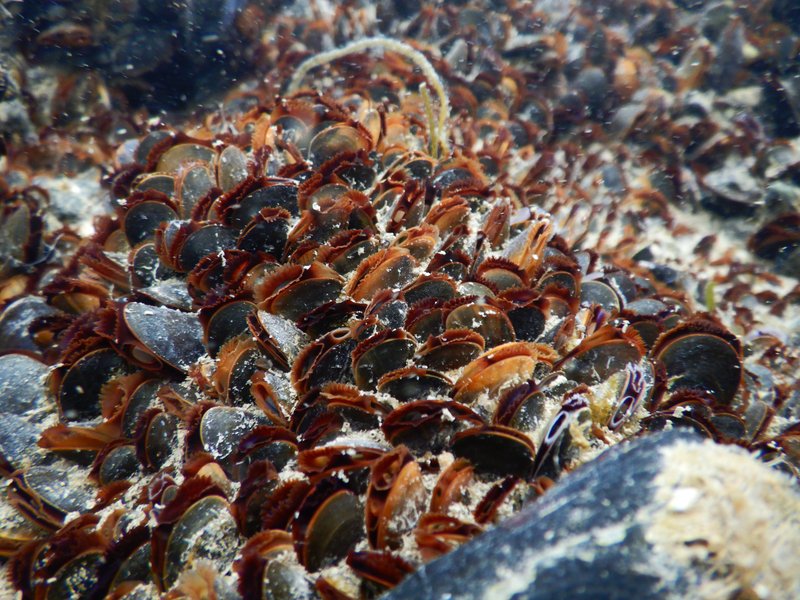
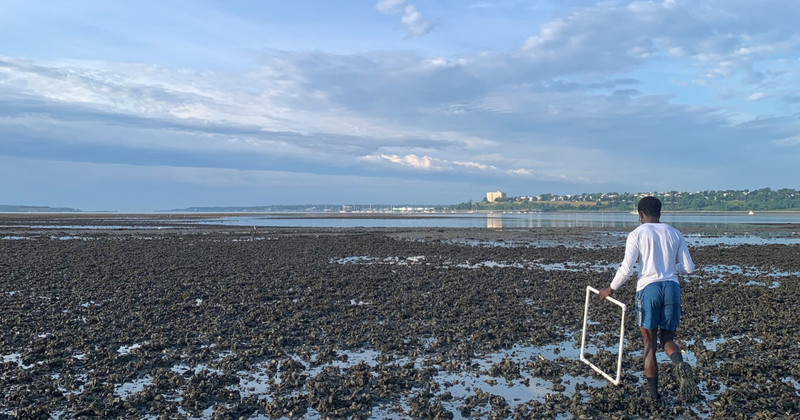
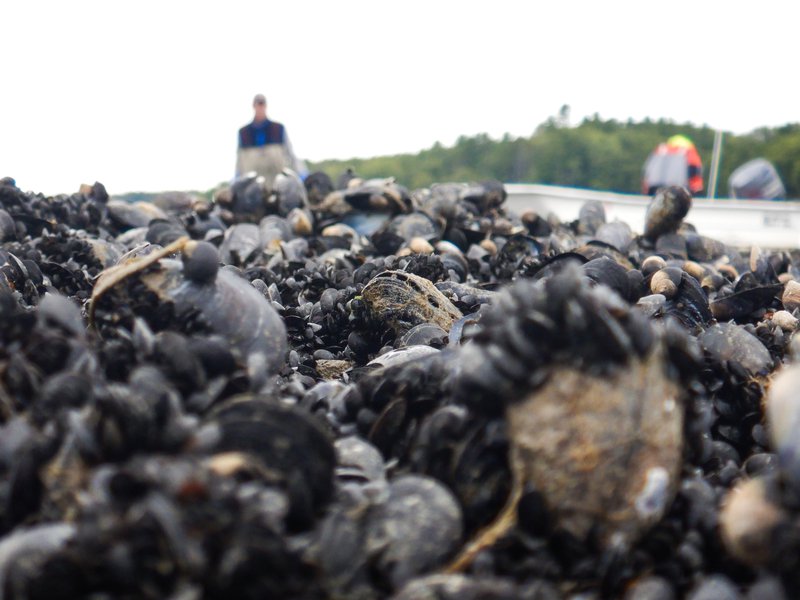
Camera surveys like those conducted in 2017 are effective, but they're labor-intensive and can only cover a small amount of ground at a time. We have since implemented a more efficient method: using a boat-mounted sonar system, similar to a fish finder, to record how sound reflects off the seafloor, then analyzing that data back in the lab to classify different bottom types. Mud returns one signature, and mussel beds return another — a distinction researchers confirm by cross-checking the acoustic data against what they can verify by sight at low tide. That technique has helped us map mussel beds beyond what a single low-tide walk or camera survey could cover.
Even with sonar, deciding where to survey in the first place is its own challenge. Maine's coastline includes thousands of miles of tidally influenced shoreline, far more than a small research team could cover on its own. To narrow the search, we have turned to community volunteers, who walk the shoreline during extreme low tides, when portions of subtidal beds briefly become visible, and report what they find. That crowdsourced data helps researchers decide where to focus the sonar surveys next.
The working theory behind the mussels' retreat from the intertidal zone points to two factors. The first is that warmer air and water temperatures near the surface may be pushing mussels toward cooler water below. The second is that a boom in green crabs, a mussel predator that thrives in warmer years, may be giving mussels an added incentive to move out of reach. Either way, the mussels haven't vanished. They've found a way to persist, just somewhere less visible than before.
The Red Cod Ecotype
Cod have long been considered one of the species most vulnerable to a warming Gulf of Maine, and the Gulf of Maine stock remains far below historic levels. But within the species, our researchers have identified something unexpected: a distinct color variant, or ecotype, that may be better suited to warmer conditions.
Alongside the familiar gray-green cod found at the seafood counter, a red-colored cod ecotype turns up throughout the Gulf of Maine. The red ecotype is rarely caught by commercial gear because it tends to live in shallow, kelp-associated habitat that nets don't typically reach. Research comparing the two ecotypes has found meaningful differences beyond color. The gray-green ("olive") cod have a mixed diet that includes forage fish, a broader depth range, larger body size, and faster growth. These traits have made them the more productive, commercially important component of the fishery. Red cod, by contrast, feed mostly on bottom invertebrates like crabs and worms, stay in shallow water year-round, and grow more slowly, but they appear to tolerate warm temperatures notably better than their olive counterparts.
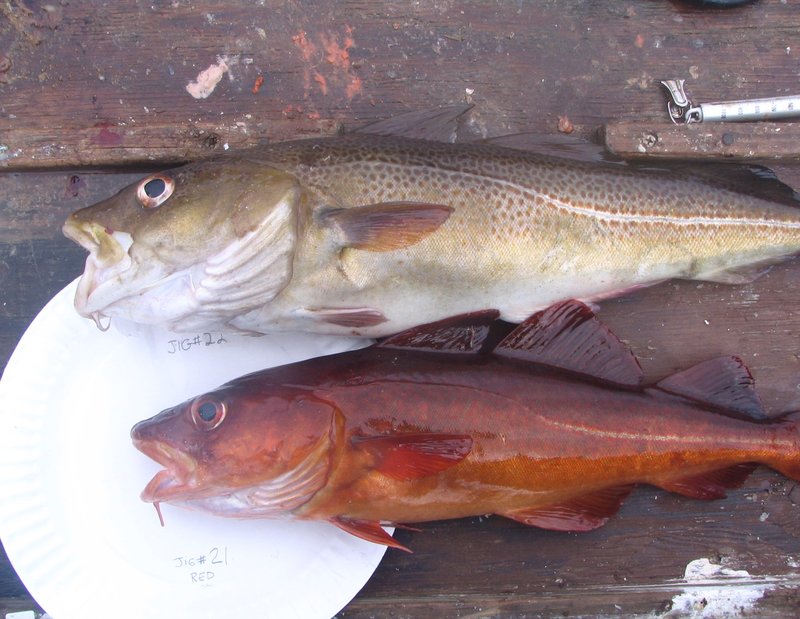
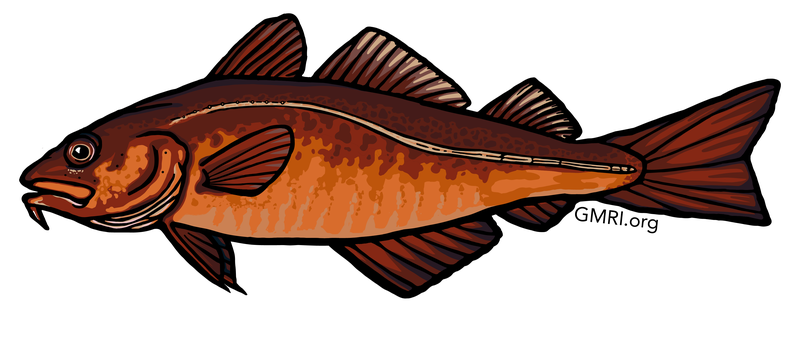
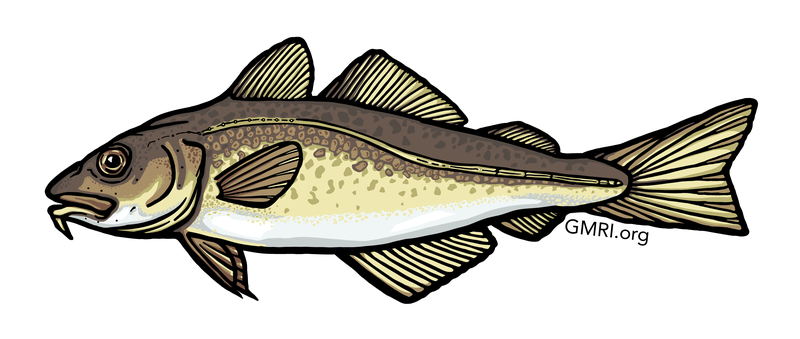
Acoustic tagging data supports this. As inshore waters warm through the summer and fall, olive cod tend to move out, while red cod stay put. Our researchers describe this as a kind of biological diversification — a built-in strategy, so that if one ecotype struggles, another can carry the population forward. If warming continues to challenge the olive ecotype, the red ecotype's tolerance for heat may allow the species as a whole to persist in the Gulf of Maine even as its more familiar form comes under pressure.
Life Finds a Way
Alewives, blue mussels, and cod face three very different challenges, and they're responding in three very different ways: one with help from a major dam-removal project, one through an apparent shift in habitat, and one through variation built into the species itself. But they share something in common: none of them are absorbing the effects of a changing Gulf of Maine without a fight.
Resilience and the capacity to adapt appear to be a built-in feature of these fisheries and ecosystems, not an exception to the rule. That doesn't mean the Gulf of Maine's challenges aren't real, or that every species will find its own node of resilience. But it does mean the story is more complicated, and more hopeful, than decline alone. Understanding how and why these adaptations happen is central to our work. That understanding is what allows us to make better decisions for the fisheries and communities that depend on this changing Gulf.