Search: Programs and Projects
Results
-
![groundfishermen trawling for groundfish in the gulf of maine]()
Verifying Responsible Harvest
The Gulf of Maine Responsibly Harvested label highlights seafood that meets important criteria around responsible harvest. To verify a species, GMRI develops assessment reports with …
Community
-
![A group of students in a classroom investigating field trip photos on a computer screen with one hand pointing at the screen.]()
Extending LabVenture into the Classroom
In tandem with the redevelopment of LabVenture, GMRI and the Education Development Center have created a suite of classroom and teacher professional development activities to …
Education
-
![Container full of freshly harvested mussels next to the foot of a person wearing orange foul weather gear]()
Maine Aquaculture Workforce Development Strategy
In Maine’s aquaculture industry the workforce shortage has been an obstacle to growth for many businesses. This in-depth analysis aims to help determine the current …
Community
-
![This is a graphic with an icon in the middle that has two arrows pointing in towards bending lines over a dark teal background.]()
Supporting Resilience
Delve into the many resources and tools available to help fisheries stakeholders strengthen and manage climate resilience.
Science
-
![People are gathered inside a small library in a discussion circle.]()
Climate Vulnerability Assessments
We conduct vulnerability assessments in collaboration with communities that seek to explore, understand, and document how climate change affects them.
-
![A chef sprinkles salt on fish fillets on a wooden cutting board with herbs next to the fillets]()
Gulf of Maine Responsibly Harvested®
The Gulf of Maine Responsibly Harvested® label is a promise that seafood hails from the clean, cool waters of the Gulf of Maine and the …
Community
-
![Two circular cameras with white bases are mounted on a metal beam of a ship.]()
Electronic Monitoring (EM)
In an attempt to reduce the expense of at-sea monitoring, we are working with managers and fishermen to develop cost-effective alternatives. Electronic monitoring (EM) offers …
Community
-
![Teachers gather in a small discussions indoors.]()
Connected Learning Ecosystems (CLEs)
Across our education efforts we support educators with professional learning opportunities that help them engage students in authentic science learning experiences. Workshops introduce educators to …
Education
-
![A man in a white shirt and black sunglasses holds of a yellow and blue tuna.]()
Atlantic Ocean Tropical Tuna Tagging Program
Non-conventional techniques used to identify stock structure in other tunas (e.g., otolith chemistry, genetic analyses), unfortunately, don’t work well for tropical tunas, so determining if …
Science
-
![A fishermen stands near the end of the boat as he guides a trawl net into the water.]()
Reducing Cod Bycatch with the ULOT Net
With the help of local fishermen, we developed a new trawling net called the ultra-low-opening trawl (ULOT) which simultaneously avoids catching cod and haddock without …
Science

Verifying Responsible Harvest
The Gulf of Maine Responsibly Harvested label highlights seafood that meets important criteria around responsible harvest. To verify a species, GMRI develops assessment reports with …
Community

Extending LabVenture into the Classroom
In tandem with the redevelopment of LabVenture, GMRI and the Education Development Center have created a suite of classroom and teacher professional development activities to …
Education

Maine Aquaculture Workforce Development Strategy
In Maine’s aquaculture industry the workforce shortage has been an obstacle to growth for many businesses. This in-depth analysis aims to help determine the current …
Community

Supporting Resilience
Delve into the many resources and tools available to help fisheries stakeholders strengthen and manage climate resilience.
Science
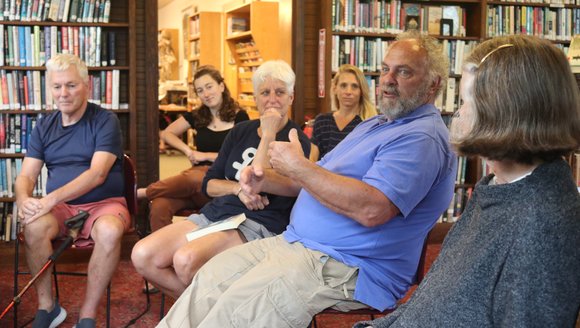
Climate Vulnerability Assessments
We conduct vulnerability assessments in collaboration with communities that seek to explore, understand, and document how climate change affects them.

Gulf of Maine Responsibly Harvested®
The Gulf of Maine Responsibly Harvested® label is a promise that seafood hails from the clean, cool waters of the Gulf of Maine and the …
Community

Electronic Monitoring (EM)
In an attempt to reduce the expense of at-sea monitoring, we are working with managers and fishermen to develop cost-effective alternatives. Electronic monitoring (EM) offers …
Community

Connected Learning Ecosystems (CLEs)
Across our education efforts we support educators with professional learning opportunities that help them engage students in authentic science learning experiences. Workshops introduce educators to …
Education

Atlantic Ocean Tropical Tuna Tagging Program
Non-conventional techniques used to identify stock structure in other tunas (e.g., otolith chemistry, genetic analyses), unfortunately, don’t work well for tropical tunas, so determining if …
Science

Reducing Cod Bycatch with the ULOT Net
With the help of local fishermen, we developed a new trawling net called the ultra-low-opening trawl (ULOT) which simultaneously avoids catching cod and haddock without …
Science